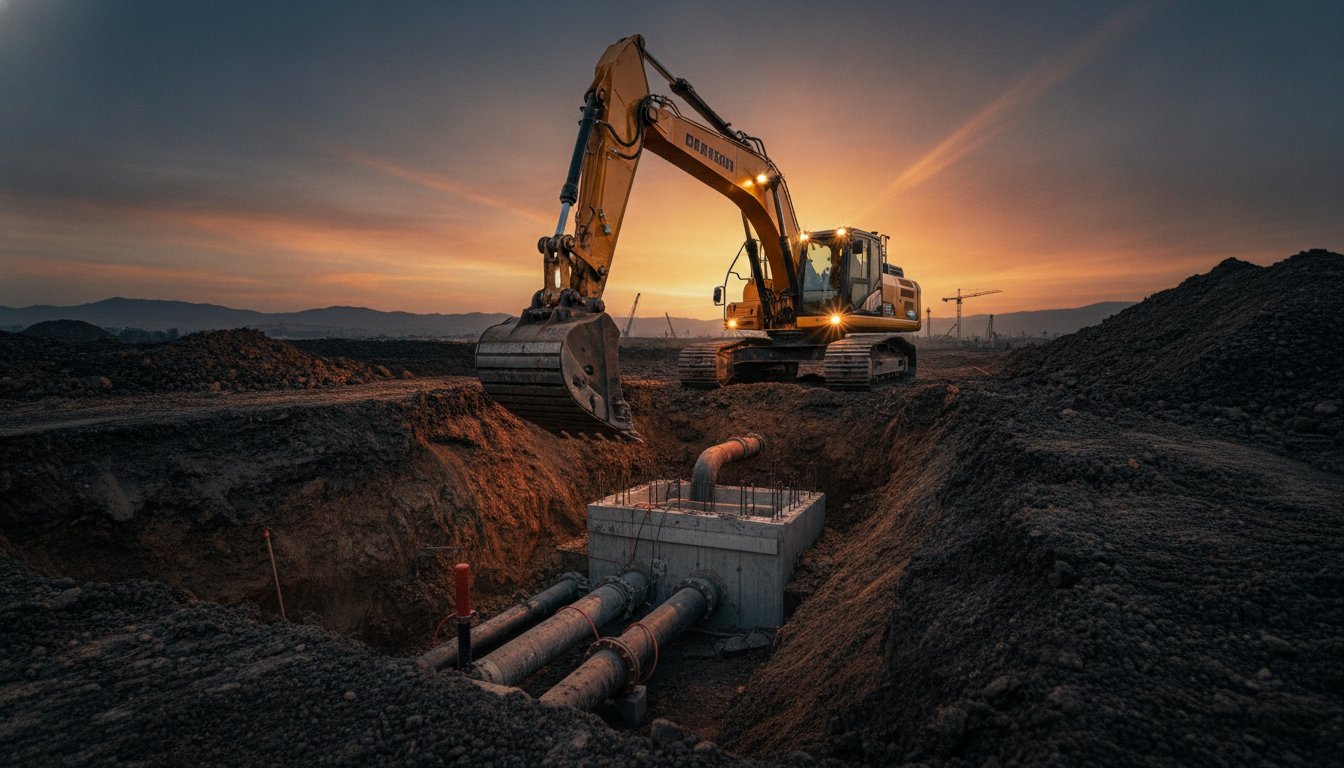
A single failed sewer main can bankrupt a project before the first tenant moves in. In Southern California, the ground is always moving and the regulations are always changing. You face a national labor shortage of 500,000 workers while trying to hit tight deadlines. It’s a high-stakes environment where poor installation isn’t just an inconvenience; it’s a liability. Mastering heavy engineering requires more than just big machines. It demands a precise understanding of local seismic standards and the grit to get the job done right the first time.
You need infrastructure that holds up under pressure. We know that following the 2025 California Building Standards Code and the new 5% retention cap for private contracts is a constant headache. This guide gives you the tools to master these complexities. You’ll learn how to secure successful utility mains, maintain strict ADA compliance, and guarantee long-term structural integrity. We’ll examine the full lifecycle of a project. Plan. Build. Maintain. It’s time to build infrastructure that lasts.
Key Takeaways
- Master the high-load complexities of heavy engineering to ensure large-scale civil projects survive regional seismic shifts.
- Execute underground utility construction efficiently using trenchless technologies like CIPP lining and pipe bursting.
- Comply with municipal regulations using precision-engineered box culverts and ADA-compliant concrete work.
- Map existing lines accurately with hydro excavation to prevent utility strikes and costly project delays.
- Plan. Build. Protect. Secure structural integrity through expert design-build services and 24/7 emergency response.
What is Heavy Engineering in Civil Construction?
Heavy engineering isn’t about quick fixes or residential repairs. It’s the backbone of civil infrastructure. It involves large-scale projects, high-load capacities, and complex systems that keep a city functioning. While light mechanical engineering focuses on smaller components and machinery, heavy civil construction deals with the physical foundation of the urban landscape. We design for durability. We build for a 50 to 100-year lifecycle. Every pipe laid and every culvert installed is a commitment to the future of the region.
The core of this discipline lies in managing the massive forces of nature and urban density. To understand What is Heavy Engineering, you must look at the sectors that define it. This includes municipal water mains, regional sewer systems, and expansive storm drain networks. These aren’t just pipes in the ground. They are engineered solutions that must withstand seismic activity, soil shifts, and immense surface loads. Modern heavy engineering is the art of building invisible, indestructible infrastructure that survives the specific pressures of Southern California. It’s rugged, essential work.
The Scale of Heavy Civil Projects
We move beyond standard residential plumbing to municipal-grade mains. These projects require managing immense weight and internal pressure within congested underground utility corridors. We handle deep-trench excavations that demand advanced shoring systems and meticulous safety protocols. Whether we are installing large-diameter sewer mains or massive box culverts, the scale is formidable. We follow a clear lifecycle: Analyze. Excavate. Install. Every step is calculated to ensure the system handles the regional capacity requirements of a growing Southern California. Understanding the full scope of what is heavy civil construction and how large-scale infrastructure is delivered in 2026 is essential for any team managing municipal-grade projects in this region.
Durability and Material Standards
Material selection defines engineering success. We don’t guess; we calculate. The choice between Ductile Iron and HDPE depends on the specific environment and the intended load. In Southern California, soil chemistry is often aggressive and corrosive. We conduct thorough soil analysis to ensure long-term structural integrity. We engineer systems for extreme load-bearing environments, such as major highways and airports. The work must remain stable under the constant vibration of traffic and the unpredictable movement of the earth. We use materials that resist corrosion and survive the test of time. Just as Seacoat SCT, LLC provides specialized coatings for heavy-duty maritime applications, we select materials designed for the specific chemical and physical stresses of the underground environment. We focus on the grit of the job. This means ensuring that every joint is sealed and every bedding layer is compacted to exact specifications. We don’t cut corners on the foundation because the surface depends on it. Reliability is built from the bottom up.
Core Disciplines of Underground Heavy Engineering
Underground heavy engineering is where the theoretical meets the physical. It’s not enough to have a blueprint; you need the capacity to execute. This discipline involves more than just trenching. It requires the integration of high-pressure systems into existing, live urban environments. We perform wet taps and hot taps that allow for new connections without shutting down critical services. This level of technical skill prevents community-wide outages and keeps commerce moving. It’s about maintaining the flow of a city while expanding its reach.
The Core Disciplines of Underground Heavy Engineering cover everything from geotechnical stability to hydraulic flow. We manage site development through rigorous excavation, grading, and structural shoring. These aren’t isolated tasks. They’re part of a coordinated effort to prepare the ground for decades of service. We handle the heavy lifting of excavation and grading to ensure a stable foundation. This includes specialized shoring systems that protect workers and adjacent structures during deep-trench work. Survey. Shore. Set. We don’t leave anything to chance.
Sewer and Water Infrastructure
Building the networks that carry the lifeblood of the city requires massive scale. This includes the installation of large-diameter sewer mains and the complex piping required for regional lift stations. We don’t just work on new developments. We specialize in septic-to-sewer conversions that bring aging neighborhoods into the modern era. We also provide high-density fire service installations, ensuring hydrants and fire lines meet the strict pressure demands of commercial safety codes. For projects requiring specialized underground utility construction, we provide the expertise needed to navigate these high-stakes environments.
Storm Drain and Box Culvert Solutions
When the rains hit Southern California, the volume of water is staggering. Standard piping won’t cut it. We install large-scale box culverts to manage regional storm runoff. Whether using pre-cast sections for speed or cast-in-place concrete for custom geometries, the goal is the same: total control of water flow. We integrate these systems into existing municipal channels to prevent erosion and protect property. Working with a qualified box culvert installation contractor in California ensures that precast selection, Caltrans compliance, and structural soundness are handled with the precision these systems demand. We manage utility relocations and coordination, ensuring that new lines don’t interfere with existing power or gas grids. We assess. We build. We protect.
Advanced Technical Solutions and Specialized Equipment
Modern heavy engineering requires more than raw power. It demands surgical precision in high-stakes environments. We don’t just rely on massive excavators; we utilize specialized technology to solve complex infrastructure problems. This means moving beyond traditional methods when the project footprint is tight or the risks are high. In Southern California’s dense urban corridors, the ability to work around existing utilities without causing service interruptions is the mark of a true specialist. We deploy advanced equipment to ensure every project is completed with total accuracy and structural integrity.
The right tools define the outcome. We use high-resolution CCTV sewer inspections to conduct comprehensive audits of existing lines. This isn’t just about finding a leak. It’s about mapping the internal condition of a municipal system to plan for long-term resilience. We identify. We analyze. We execute. By using non-destructive methods like hydro excavation and vacuum potholing, we protect the invisible networks of fiber optics and gas lines that keep the region running. Technical precision is our standard. Reliability is our result.
Trenchless Pipeline Rehabilitation
Surface disruption is a major liability in civil construction. We use trenchless technologies to restore or replace underground mains with minimal impact on traffic and commerce. CIPP (Cured-In-Place Pipe) lining allows us to create a seamless, resin-saturated pipe within the existing structure. It’s a high-strength solution that eliminates joints and stops root intrusion. For lines that require full replacement, we use pipe bursting. We pull a new HDPE pipe through the old one, shattering the host pipe and expanding the corridor simultaneously. This method maintains the original path while upgrading the material to modern standards. Inspect. Rehabilitate. Restore.
Precision Excavation and Mapping
In congested utility zones, traditional digging is too risky. We use hydro excavation to safely expose sensitive lines. Pressurized water loosens the soil while a high-flow vacuum removes the debris. This “soft digging” prevents the catastrophic strikes that often occur with mechanical backhoes. We also utilize vacuum excavation for precision potholing to verify utility depths before major construction begins. To keep the city moving during repairs, we implement complex bypass pumping systems. We divert the flow. We perform the repair. We restore the system. This logistical coordination ensures that critical sewer and water services remain live even during heavy engineering interventions. Locate. Excavate. Verify.
Safety is non-negotiable in deep-trench work. We utilize engineered shoring systems to lock the earth in place and protect our crews. These systems are designed to withstand the immense lateral pressure of Southern California’s varied soil types. Whether we’re installing a box culvert or a deep-trench sewer main, the structural integrity of the excavation site is our first priority. We build with the confidence that our worksites are as stable as the infrastructure we leave behind.
Southern California Engineering: Navigating Regional Challenges
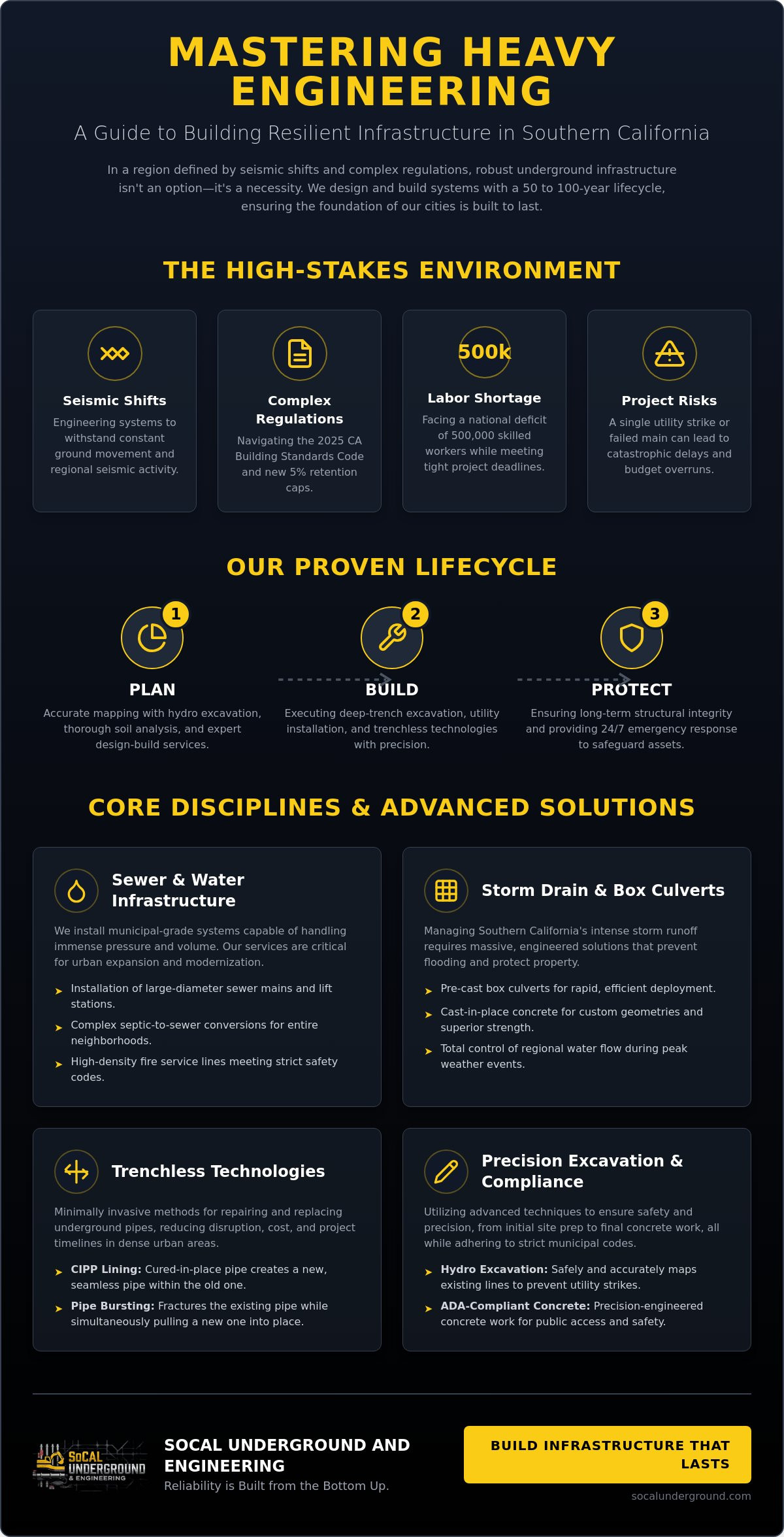
Southern California is a punishing environment for infrastructure. The ground moves. The traffic never stops. The regulations are the strictest in the nation. Success here requires more than standard construction practices. It demands a specialized approach to heavy engineering that accounts for seismic volatility and dense urban constraints. We don’t just build; we engineer for resilience. Every project must comply with the 2025 California Building Standards Code, which took effect on January 1, 2026. We navigate these complexities so your project stays on track and under the new 5% retention cap for private contracts.
Public works construction standards in Los Angeles and San Diego County are non-negotiable. We coordinate directly with municipal agencies to handle utility relocations and street restoration. This involves managing complex traffic control plans for high-volume corridors. We don’t let logistical hurdles slow down the work. We secure the permits. We manage the flow. We deliver the result. Our team understands the local landscape because we’re on the ground every day. Working with experienced underground utility contractors who know the specific regulatory and technical demands of the SoCal region is essential to keeping projects on schedule and within budget. Partnering with a trusted site development contractor in Southern California who understands the full scope of large-scale infrastructure delivery ensures your project meets the structural and compliance demands of 2026 and beyond. We provide the technical expertise needed to survive the unique pressures of the SoCal region.
Seismic and Soil Considerations
The earth in coastal and inland regions is rarely stable. We address shifting soil conditions by using advanced flexible joint technology for water and sewer lines. These systems allow for movement during seismic events without catastrophic failure. We also implement rigorous structural shoring for deep excavations. This is critical in unstable ground where the risk of collapse is high. We analyze the soil. We shore the trench. We set the pipe. This tripartite approach ensures that underground assets remain functional even after significant ground shifts. We build for the long-term integrity of the network.
Compliance and Surface Improvements
Engineering doesn’t end at the utility line. We handle full asphalt and concrete restoration to meet exact municipal street-cut requirements. This includes the installation of ADA-compliant ramps, sidewalks, and cross gutters. With the shift toward denser housing under SB 79, integrating accessible concrete work into civil projects is more important than ever. We ensure every driveway approach and sidewalk repair meets the latest standards for slope and texture. We also manage the coordination for wet taps and line stops with local utility companies. If you need a partner who understands the grit of local regulations, contact us for heavy engineering services today. We get the job done right.
Why Reliability Matters: The SoCal Underground Approach
Infrastructure failure is a constant threat. When a water main bursts or a sewer line collapses, the clock is ticking. We offer 24/7 emergency response to address critical infrastructure failures before they escalate into regional disasters. Our teams are ready to mobilize at a moment’s notice. We manage the entire emergency lifecycle: Assess. Mobilize. Repair. This includes implementing immediate traffic control and site safety management to protect the public. We minimize downtime for municipal and commercial clients by working through the night to restore essential services. We don’t wait for business hours because the city doesn’t stop. We have the equipment and the grit to handle the most intense heavy engineering emergencies under pressure.
24/7 Emergency Infrastructure Support
Rapid mobilization is our standard for water main breaks and storm drain emergencies. We understand that every hour of service interruption costs money and impacts public safety. We handle the logistics so you don’t have to. We secure the site. We divert the flow. We fix the line. Our emergency traffic control teams ensure that even the busiest SoCal intersections remain safe during critical repairs. We provide a steady beat of reliability when everything else is failing. Plan. Act. Restore.
The Handshake Style of Professionalism
Our design-build capability provides a single point of accountability from the initial inquiry to the final result. We take projects from concept to completion, managing every technical detail along the way. This includes utility coordination, shoring, and final asphalt paving. We are a full-service civil partner. We handle the deep-trench heavy engineering and the final surface improvements. You get one crew that understands the entire scope. We prioritize efficiency and structural soundness in every phase. If you’re ready for a partner who values integrity above all else, Get a direct quote for your next heavy engineering project. We build it right. We build it to last.
Secure Your Infrastructure Legacy
Building for a 100-year lifecycle in Southern California isn’t a suggestion; it’s a requirement. You’ve seen how seismic resilience, ADA compliance, and precision mapping define successful civil projects. High-stakes heavy engineering demands a partner who understands the grit of the job site and the weight of regional regulations. We don’t just lay pipe. We engineer systems that survive the pressures of a moving earth and a growing population. Whether you’re managing municipal water mains or complex storm drain networks, the structural integrity of your site is our priority.
Integrity is built into every trench we shore and every line we rehabilitate. As a licensed Southern California civil contractor, we bring specific expertise in CIPP and trenchless tech to every project. We don’t wait for disaster to strike. Our 24/7 emergency response team is ready to mobilize when critical infrastructure fails. Plan. Execute. Protect. It’s time to work with a team that values your project as much as you do. Contact SoCal Underground for Expert Heavy Engineering Services and get a direct, no-nonsense quote today. Let’s build something indestructible.
Frequently Asked Questions
What is the difference between heavy engineering and civil engineering?
Heavy engineering is a specialized subset of civil engineering focused on large-scale, high-load projects and complex industrial infrastructure. While civil engineering covers broad design and construction, heavy engineering deals with the physical installation of massive components like municipal water mains and regional storm drains. It’s the difference between drawing a bridge and installing a 50-ton box culvert. We focus on the execution of the most demanding underground utility corridors.
What are the main types of heavy engineering services for utilities?
The primary services include large-diameter sewer main construction, water main installation, and regional storm drain management. We also handle complex utility wet taps, hot taps, and lift station piping for municipal networks. These services require specialized equipment and shoring systems to manage immense underground pressures. Every project follows a strict lifecycle: Plan. Excavate. Install. We build the invisible networks that sustain urban density.
How does trenchless technology improve heavy engineering projects?
Trenchless technology, such as CIPP lining and pipe bursting, restores or replaces underground lines with minimal surface disruption. This reduces the need for massive open-cut excavations, which often paralyze traffic and commerce in Southern California. It’s a high-strength solution that maintains existing utility paths while upgrading material durability. We use these methods to provide faster, cleaner, and more efficient infrastructure rehabilitation.
Why is hydro excavation considered a best practice in heavy engineering?
Hydro excavation is the safest method for exposing sensitive underground utilities in congested urban zones. It uses pressurized water to loosen soil while a high-flow vacuum removes debris, preventing catastrophic strikes to fiber optics or gas lines. This soft digging technique provides precision utility mapping that traditional mechanical backhoes cannot match. Locate. Excavate. Verify. It’s the standard for protecting regional infrastructure.
What are the specific heavy engineering requirements for Southern California?
SoCal projects must meet strict seismic resilience standards and the 2025 California Building Standards Code. We use flexible joint technology for utility lines to survive ground shifts and follow rigorous structural shoring protocols for deep excavations. Compliance also includes meeting specific municipal street-cut restoration requirements and ADA standards for surface concrete. We navigate these local regulations to ensure long-term structural integrity and project approval.
How much does heavy engineering typically cost for a municipal project?
Costs vary significantly based on project scale, soil conditions, and the complexity of the utility relocations involved. California construction pricing is approximately 30% above the national average, influenced by material price volatility and high labor costs. We don’t provide generic estimates because every site has unique technical demands. We recommend a thorough site assessment to determine the specific logistical and engineering requirements for an accurate quote.
Can SoCal Underground handle emergency water main repairs 24/7?
Yes, we maintain a 24/7 emergency response team for critical sewer and water main failures. We mobilize rapidly to manage water main breaks, storm drain collapses, and urgent utility repairs at any hour. Our team handles the entire emergency process, including site safety and traffic control management. We don’t wait for business hours when the region’s infrastructure is at risk.
What is a box culvert, and when is it used in heavy engineering?
A box culvert is a large, rectangular concrete structure used to manage massive water volumes in regional storm drain systems. These are essential in Southern California to control flash flood runoff and prevent erosion in municipal channels. We install pre-cast or cast-in-place box culverts as a California heavy civil stormwater solution to provide high-load capacity under roadways and airports. They are the heavy-duty solution for high-volume water management.